Retinol Sandwich Method: No More Peeling
The retinol sandwich method, step by step: moisturiser, retinol or tretinoin, moisturiser again — plus a 4-week ramp that stops flaking, shedding and dryness.
By Lola’s Mom · August 24, 2026 · Updated August 24, 2026 · 9 min read
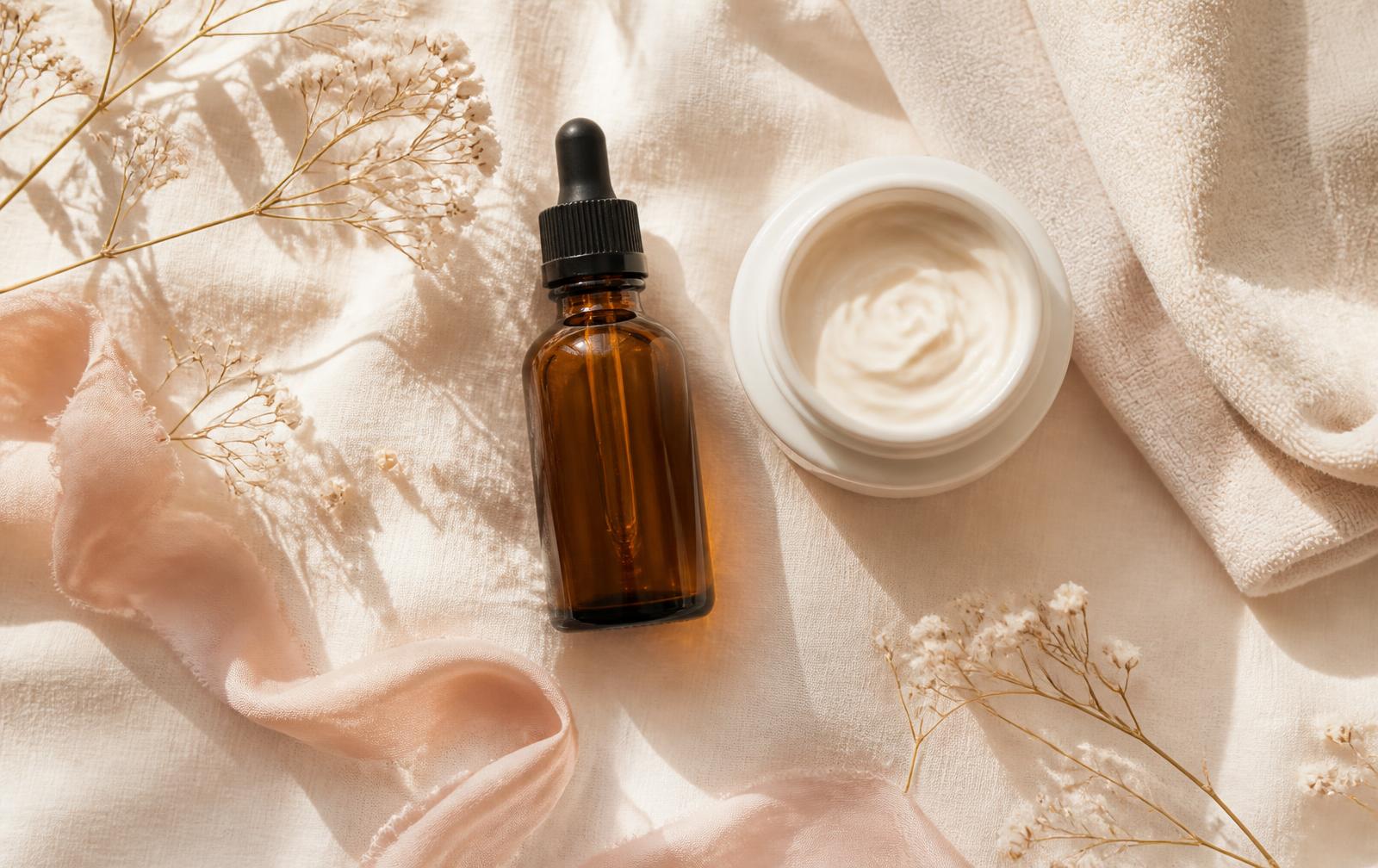
The sandwich method is simple: apply a thin layer of moisturiser, wait two to three minutes, apply a pea-sized amount of retinol or tretinoin, then apply moisturiser again on top. The cream on either side buffers the active so it still works, with far less peeling, flaking and stinging. Do it at night, on completely dry skin, two to three nights a week to start.
There is a specific week in every retinoid story where you look worse than when you started. Fine flakes lifting off the cheeks, a tight shiny band along the jaw, foundation catching on texture that wasn't there in March. Most people quit right there — and the ones who don't usually push harder, which is worse.
The fix isn't a gentler active, it's a buffer. Sandwiching slows how fast the retinoid reaches the skin to a dose your barrier can actually keep up with. Same results, spread over a slightly longer timeline, without the shedding phase that makes everyone give up.
This is the routine I use with tretinoin (or an over-the-counter retinal) and azelaic acid together, and it's the only version that survived a full winter on my skin.
Why extreme shedding happens in the first place
Retinoids speed up how fast skin cells turn over. Early on, the new cells arrive before the old ones have finished letting go, and the glue between them (your lipid barrier) gets thinned in the process. That's the flaking, the stinging, the weird dry patches in places you're never dry.
Azelaic acid isn't an exfoliant in the same way, but it is an active — and stacked on top of a barrier that's already thin, it's what turns "a bit dry" into red, raw and burning.
So the goal is never to out-tough it. Purging is real for congestion; peeling in sheets is not a purge, it's barrier damage. Two very different things and it's worth being honest about which one you're looking at in the mirror.
The sandwich method, exactly
Do this at night, on completely dry skin. Damp skin drives actives in faster, which is the opposite of what you want here.
1. Cleanse, then wait. Gentle low-pH cleanser, pat dry, and genuinely wait 10 minutes until your face isn't cool to the touch. This one pause prevents most of the stinging.
2. First slice — moisturiser. A thin, even layer of a simple ceramide cream over the whole face. Not a serum, not a watery lotion — a cream. Let it settle for 2–3 minutes.
3. The filling — your active. A pea-sized amount of retinoid for the entire face, dotted on and spread outward. Skip the eyelids, the corners of the nose and the smile creases the first month; those three spots cause about 80% of complaints.
4. Second slice — moisturiser again. Another layer of the same cream on top, slightly more generously. If you're very dry, a thin occlusive over the driest zones only (jaw, cheeks) locks it in overnight.
That's it. No acids, no vitamin C, no exfoliating toner on the same night. The whole point is one active, buffered on both sides.
How to slot azelaic acid in without stacking damage
Azelaic acid is the calmest way to keep working on redness, texture and post-acne marks while your barrier recovers — but not in the same sandwich as your retinoid.
Alternate nights is the version that works: retinoid sandwich on Monday, azelaic acid on Tuesday, and so on. If your skin is currently peeling, start at retinoid twice a week and azelaic on two other nights, with three plain moisturiser nights in between.
Or split by time of day. Azelaic acid in the morning (it layers beautifully under sunscreen and doesn't oxidise), retinoid sandwich at night. This is the setup I've settled on long-term.
One rule: never both on the same skin within the same routine, at least not until you've had four uneventful weeks. There's no bonus glow for stacking, only downtime.
The four-week ramp that avoids the shedding phase
Week 1: retinoid sandwich twice — say Sunday and Wednesday. Every other night is just cleanse and cream. Boring on purpose.
Week 2: three sandwich nights if — and only if — there was no flaking. Any flaking at all, repeat week 1.
Week 3: add azelaic acid to your mornings, alternate nights for the retinoid.
Week 4: four retinoid nights, azelaic every morning. Most people plateau happily right here and never need nightly application.
If you flake mid-ramp, drop back one week and add a moisturiser-only night. You have not lost progress; the results track total exposure over months, not how brave you were in week two.
The mistakes that keep people peeling
Applying to damp skin. Instantly doubles the sting. Dry face, always.
Using more than a pea. More retinoid does not equal faster results — it equals irritation and a two-week break, which is slower.
Any physical scrub or exfoliating pad. While you're on a retinoid, your exfoliation is handled. Scrubbing on top is how flaking turns into raw.
Skipping sunscreen. Newly turned-over skin burns faster and pigments faster. SPF 50 every morning, no negotiation — it protects the results you're paying for.
Foaming, high-pH cleansers. If your face feels tight after washing, the cleanser is undoing the sandwich before you've even applied it.
Quitting at week three. Week three is the dip. Week six is the reason people stay.
What repair actually looks like if you've already over-done it
Stop all actives for 5–7 days. Not "go gentle" — stop. Cleanse with something creamy, then ceramide moisturiser twice a day, plus a thin layer of an occlusive balm at night on the raw patches.
No acids, no vitamin C, no clay masks, no retinol, no scrubs. Barrier lipids take roughly two weeks to rebuild properly, and every active you sneak in restarts that clock.
When your skin stops feeling tight and the flaking has fully stopped, come back at week 1 of the ramp — twice weekly, sandwiched. Not where you left off.
Shop this story
Amazon · affiliate linksPrices and availability change, so tap through to check today’s price on Amazon.
The Ordinary
Azelaic Acid 10% Suspension
“The workhorse. Grippy, slightly silicone-feeling texture — a thin layer in the morning under sunscreen is all you need for redness and post-acne marks.”
Check price on Amazon
Affiliate link
Naturium
Retinal 0.1% Serum (Retinal + Ceramides)
“If you don't have a tretinoin prescription, retinal is the closest over-the-counter step. Buffered on both sides, this is very manageable.”
Check price on Amazon
Affiliate link
The Ordinary
Retinol 0.3% in Squalane
“The genuine beginner dose. Start here if you've ever peeled from a retinoid before — squalane base is far kinder than an alcohol one.”
Check price on Amazon
Affiliate link
CeraVe
Moisturizing Cream with Ceramides
“This is the bread of the sandwich. Thick, ceramide-rich, fragrance-free — one tub lasts a whole ramp-up.”
Check price on Amazon
Affiliate link
La Roche-Posay
Cicaplast Baume B5+ Soothing Balm
“For the already-peeling week. Thin layer over the raw patches at night; it stops that tight, windburned feeling overnight.”
Check price on Amazon
Affiliate link
CeraVe
Hydrating Facial Cleanser, Non-Foaming
“Creamy, low-pH, doesn't strip. If your face feels tight after cleansing, no amount of sandwiching will save you.”
Check price on Amazon
Affiliate link
COSRX
Snail 96 Mucin Power Essence
“Optional but lovely on non-active nights — it makes the flaking phase look less papery while your barrier rebuilds.”
Check price on Amazon
Affiliate link
EltaMD
UV Clear Broad-Spectrum SPF 46
“Contains niacinamide, sits well over azelaic acid, and doesn't pill. The single most important product on this list.”
Check price on Amazon
Affiliate link
Beauty of Joseon
Watery Sun Cream SPF 50+ PA++++
“The affordable daily option — no white cast, no stinging on retinoid-thinned skin, reapplies without wrecking makeup.”
Check price on Amazon
Affiliate link
The Ordinary
Squalane Oil, 100% Plant-Derived
“Two drops pressed over the second moisturiser layer on your driest nights. Cheap, unglamorous, quietly essential.”
Check price on Amazon
Affiliate link
Questions readers ask
What is the retinol sandwich method?
The retinol sandwich method is applying moisturiser before and after your retinol or tretinoin, so the active sits between two layers of cream. The cream buffers absorption, which keeps the results while cutting the dryness, flaking and stinging that come with unbuffered application.
How do you do the sandwich method with retinol, step by step?
1) Cleanse with a gentle low-pH cleanser and pat dry. 2) Wait 10 minutes until skin is completely dry. 3) Apply a thin layer of ceramide moisturiser and let it settle 2–3 minutes. 4) Apply a pea-sized amount of retinol or tretinoin to the whole face, avoiding eyelids and nose creases. 5) Apply moisturiser again, slightly more generously. Start at two nights a week.
Does the sandwich method make my retinoid less effective?
It slightly slows how fast the active penetrates, not whether it works. Studies on buffering with moisturiser show comparable long-term results with markedly less irritation — and since the main reason people fail on retinoids is quitting during the peeling phase, consistency wins by a wide margin.
When should you stop the sandwich method with retinol?
There's no need to stop at all — plenty of people sandwich indefinitely. If you want a stronger dose, drop only the first (under) layer after about eight uneventful weeks, keep the top layer, and go back to the full sandwich the moment any flaking returns.
Can I use retinoid and azelaic acid on the same night?
Not while you're still adjusting. Alternate nights, or put azelaic acid in the morning and the retinoid sandwich at night. After about four uneventful weeks some skin tolerates layering azelaic under a sandwiched retinoid — but there's no result benefit worth the risk of downtime.
How long does retinoid peeling last?
With a sensible ramp, most people see mild flaking for 1–3 weeks around weeks 2–4, and then it settles. Sheet-like peeling, burning or stinging with water isn't a normal adjustment — that's barrier damage, and it needs a full stop for 5–7 days.
Should I moisturise before or after my retinoid?
Both — that's the whole method. Cream, wait a couple of minutes, retinoid, then cream again. On very dry nights, finish with a thin occlusive balm or two drops of squalane over the driest areas only.
Is azelaic acid safe for sensitive skin and rosacea?
It's one of the better-tolerated actives for redness-prone skin and is commonly used for rosacea. Start with a 10% formula every other morning, apply to dry skin, and always finish with sunscreen. Prescription-strength 15–20% versions exist but should come from a clinician.
Do I still need sunscreen if I only use my retinoid at night?
Yes, and more than before. Retinoids speed cell turnover, so newer skin sits at the surface and burns and pigments more easily. Daily SPF 50 is what protects the even tone you're working towards.
The full bundle
Shop the look
All 10 pieces in one list — tap any line to shop it. Prices are estimates and change often on Amazon.
Total estimated cost: $175
Actives · 3
$44Barrier · 5
$74FLEUR45
Some chapters end quietly. Others become the beginning of your rebirth.
Launching October 31, 2026
Keep reading
All posts →- How-to

The Sudanese Glow: A Skincare Routine for Deep, Sun-Kissed Skin
Sandalwood paste, shea butter, dukhan. The Sudanese glow ritual is centuries old — here's how to fold it into a modern routine.
- How-to

Khaleeji Eye Makeup: The Cat-Eye Tutorial That Lasts 14 Hours
Sharp, lifted, unapologetic. The Khaleeji cat-eye is its own art form — here's how to execute it.
- How-to
How to Layer Oud Perfume Like a Khaleeji (Without Smelling Like a Mosque)
Layering oud is how Khaleeji women build a signature scent. Here's the formula — and the pairings to avoid.
Editor recommends
Some links are affiliate links — they cost you nothing extra.